

We Told Women to Be More Resilient. It Backfired.

A few weeks ago, I was sitting across from a woman who, by the looks of it, was doing everything “right.”
She was successful in her career, deeply involved in her family, and the kind of person others described as reliable, steady, and strong. The sort of woman who keeps everything moving, even when things around her are anything but still.
But when she sat down, she didn’t look strong. She looked tired in a way that didn’t lift with sleep.
The kind of tired that builds quietly over years of being the one who handles it.
She started talking about her life in pieces the way many women do when they’re trying to explain something they don’t fully have language for yet. Her aging parents needed more help. Her adult children were navigating complicated seasons. Work was demanding more of her time and emotional energy than it used to. Friends leaned on her. Her household ran because she ran it.
At some point in the conversation, she paused and gave a small, knowing laugh.
“I already know what I need to do,” she said.
I asked her what she meant.
She smiled faintly and said,
“Everyone always says the same thing. I need better boundaries. I need more self-care. I need to build more emotional capacity.”
There it was.
A sentence I’ve heard in different forms from so many women that it almost begins to sound like background noise. Not because it isn’t well-intentioned, but because it has become the default prescription for exhaustion.
As she spoke, I found myself looking at her differently. Not because she was wrong about needing boundaries or rest. But because something about the framing didn’t fit her experience.
This woman wasn’t lacking resilience.She had been practicing it her entire life.
She had the capacity to stay calm when others were falling apart. The capacity to absorb tension in a room and smooth it over. The capacity to keep functioning when she was overwhelmed, disappointed, or stretched too thin. The capacity to hold responsibility for things most people didn’t even see.
In other words, she already had a very large emotional capacity. Which is why the advice she kept hearing didn’t land. Because what she needed wasn’t more capacity. It was something else entirely.
Somewhere along the way, we started telling women that burnout is a capacity problem. That if they are exhausted, it must be because they haven’t learned to regulate enough, tolerate enough, manage enough, or expand enough. But what I’ve come to believe is that this is only part of the story.
In many cases, women are not burning out because they cannot hold enough. They are burning out because they have become so good at holding that they no longer question what they are holding.
There is a subtle but important difference.
Just because you can carry something does not mean it is yours to carry.
Just because you can absorb someone else’s emotional reaction does not mean you are responsible for managing it.
Just because you can step in and fix a situation does not mean it was ever meant to be yours to solve.
Resilience, in the way it is often praised, can quietly become a form of over-functioning.
And over time, over-functioning stops looking like effort and starts looking like identity.
“I’m the one who handles things.”
“I’m the one people rely on.”
“I’m the one who figures it out.”
These identities are often rewarded. They are often praised. They are often what make women indispensable in families, workplaces, and communities. But they are also what make it incredibly difficult to stop. Because the moment a woman who has built her life around being capable begins to say no, something uncomfortable happens.
Not necessarily in the external world.
But internally.
Guilt shows up.
Anxiety shows up.
A quiet voice that says, “If you don’t do this, who will?”
And so she does it again.
Not because she lacks boundaries in theory.
But because she has spent years building an identity around being the person who doesn’t let things fall apart.
This is where the idea of “building more emotional capacity” can become misleading.
Because it can easily reinforce the very pattern that is already causing exhaustion.
If the goal is always to expand what you can tolerate, then the default solution to burnout becomes: tolerate more.
More discomfort. More responsibility. More emotional labor. More of everything.
But what if the real issue is not how much women can hold?
What if the issue is that they have been holding things they were never meant to carry in the first place?
When I think back to that conversation with the woman across from me, what stands out is not just her exhaustion. It is the moment she began to reconsider the question itself.

She went quiet for a long time, and then she said something I haven’t forgotten.
“Maybe I’ve been asking the wrong question.”
“What question?” I asked.
“How do I handle more?”
There was a pause before she continued.
“Maybe the question is why I’m handling so much.”
That shift is where everything starts to change.
Because once you stop asking how to increase your capacity, you begin to notice something else. You begin to notice how often your capacity has been used as permission to keep over-functioning. How often your strength has been interpreted as availability. How often your resilience has been mistaken for obligation.
This is not an argument against emotional growth. It is a call to redefine it.
Emotional capacity is not the ability to carry more.
It is the ability to feel what happens when you stop carrying what was never yours.
It is the ability to sit with guilt when you set a boundary and do not immediately undo it.
It is the ability to tolerate disappointment without rushing in to fix it.
It is the ability to feel grief for the parts of your life that change when you stop being everything to everyone.
It is the ability to stay present with discomfort long enough not to confuse it with danger.
And that kind of capacity does not lead to more over-functioning.
It leads to less.
Because when women develop the capacity to feel what they have been avoiding, they no longer need to organize their lives around avoiding it.
They no longer need to earn rest.
They no longer need to justify limits.
They no longer need to prove their worth through endurance.
The truth is, most of the women I speak to do not need to become more capable.
They already are.
What they need is permission to stop equating capability with obligation.
To stop confusing resilience with responsibility for everything and everyone.
To stop believing that their value is tied to how much they can carry without breaking.
Maybe we’ve been telling women the wrong story. Not because resilience is bad.
But because we forgot to ask what it is being used for.
And for many women, the most important growth edge is not learning to carry more.
It is learning, slowly and deliberately, how to put something down—and stay present long enough to realize the world does not fall apart when they do.
If this resonates with you, it may not be something you tackle on your own.
This is often the moment where women realize they don’t actually need another strategy for managing life better. They need space to understand what they’ve been carrying, why they’ve been carrying it, and what becomes possible when they stop.

This is the work I love to do. Helping women untangle over-functioning, rebuild trust with themselves, and learn what it means to put something down without guilt taking its place.
If you’re in that place where “more capacity” no longer feels like the answer, you can explore working with me this summer.
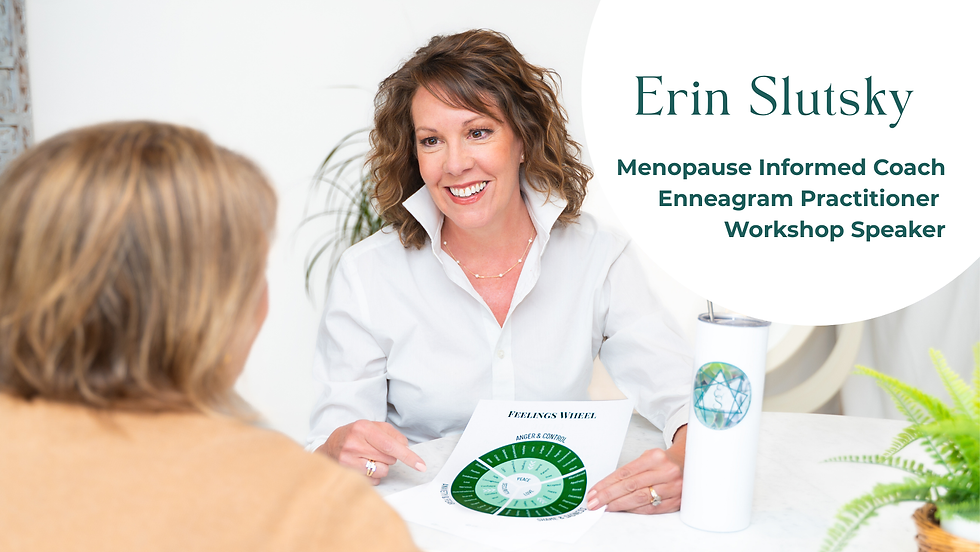
Click on the photo for all the details.


Comments